
What Lughnasadh Can Teach us About Gratitude
When we think about gratitude, it's often in the context of grounding ourselves in the moment. Or we may think about the many science-backed benefits that gratitude practices have been shown to have, from emotional resilience to help managing our anxiety. And although these are worthwhile practices (we’ve even made you a list of gratitude journal prompts if you’re interested!), the ancient celebration of Lammas (also called Lughnasadh ) offers a bigger picture perspective. This first harvest festival teaches us that gratitude isn't simply about feeling thankful—it's about recognizing the countless people, seasons, and moments of effort that make abundance possible.
Celebrated around August 1 in the Northern Hemisphere, Lammas marks the beginning of the grain harvest. For farming communities, this is a time of both relief and responsibility. The first crops were finally ready to gather after months of planting, tending, and hoping for favorable weather. A successful harvest meant food for the coming months, while a poor one could bring hardship. Gratitude wasn't an abstract idea; it was woven into daily survival.
Although most of us no longer depend on our own fields for food, the lessons of Lughnasadh remain surprisingly relevant. The holiday invites us to pause before rushing toward the next goal, to appreciate the fruits of our labor, and to recognize that every accomplishment—whether it's a thriving garden, a completed project, a stronger relationship, or a healthier financial life—began as a small seed nurtured over time.
What Is Lughnasadh?
Lughnasadh, pronounced LOO-nah-sah, is one of the eight festivals of the Wheel of the Year and celebrates the first harvest of grain. The holiday takes its name from the Celtic god Lugh, a master of many skills who established funeral games and celebrations in honor of his foster mother, Tailtiu. According to Irish tradition, Tailtiu died after clearing the land so it could be cultivated, making the festival not only a celebration of abundance but also a reminder that every harvest comes through effort and sacrifice.
The holiday is also known as Lammas, a name derived from the Old English hlaf-mæsse, or "loaf mass." In medieval England, it was customary to bake a loaf from the first grain harvested and bring it to church as an offering of thanks. While Lughnasadh and Lammas developed from different cultural traditions, both center on the same enduring themes: gratitude, nourishment, and recognizing the gifts of the harvest.
For our ancestors, the first harvest represented both celebration and uncertainty. The grain gathered at Lughnasadh was the first indication of whether the year's crops would be sufficient to carry a community through the winter. It was a moment to rejoice in what had been successfully grown while acknowledging that the harvest season was only beginning. There was still work to do, but there was also reason to pause and give thanks.
That balance is one of Lughnasadh's greatest gifts. Rather than waiting until every field has been harvested or every goal has been achieved, the festival encourages us to celebrate progress along the way. It reminds us that gratitude doesn't require perfection. We can be thankful for the first fruits of our efforts even while there is more work ahead.
Why Gratitude Is at the Heart of Lughnasadh
Gratitude is woven into every aspect of Lughnasadh. As the first harvest festival, it reminds us to recognize both the abundance we've received and the work that made it possible.
Gratitude for the Harvest
The most obvious lesson of Lughnasadh is gratitude for the harvest itself. For our ancestors, gathering the first sheaves of grain meant that months of uncertainty had finally given way to tangible abundance. Every loaf of bread, bowl of porridge, or mug of ale represented countless hours of planting, weeding, tending, and trusting that favorable weather would carry the crops to maturity.
Today, few of us grow all of our own food, but the principle remains the same. The meal on our table reflects the work of farmers, truck drivers, grocery store employees, cooks, and many others whose efforts often go unnoticed. Lughnasadh encourages us to pause and appreciate not only nature's generosity but also the human hands that help sustain our daily lives. Gratitude becomes deeper when we recognize how interconnected we truly are.
Gratitude for Our Own Efforts
Lughnasadh also invites us to acknowledge our own hard work. We often move from one goal to the next without taking time to celebrate what we've already accomplished. Like a farmer who never stops to admire the first ripe grain, we can become so focused on what's left to do that we overlook how far we've come.
This is an ideal time to reflect on the "harvests" in your own life. Perhaps you've strengthened a relationship, developed a new skill, improved your health, paid down debt, or simply made it through a difficult season with resilience. These achievements may not look as dramatic as a field of golden wheat, but they are the result of steady effort over time. Lughnasadh reminds us that our personal growth deserves recognition, too.
Gratitude Even When the Harvest Isn't Perfect
One of the most comforting lessons of Lughnasadh is that harvests have never been perfect. Ancient farmers understood that storms, droughts, pests, and illness could affect their crops despite months of careful work. Yet they still gathered what the land provided, gave thanks for what they had, and prepared wisely for the months ahead.
The same perspective can help us approach our own lives with greater compassion. Perhaps a goal didn't unfold exactly as you hoped, or a project produced mixed results. Rather than viewing those experiences as failures, Lughnasadh encourages us to ask what was gained despite the challenges. Gratitude isn't about pretending everything turned out perfectly; it's about recognizing the value, wisdom, and resilience that can emerge even from an imperfect harvest.
Five Gratitude Lessons from Lughnasadh
The symbolism of Lughnasadh extends far beyond the harvest field. By reflecting on the season's themes, we can cultivate a deeper sense of gratitude throughout the year.
1. Celebrate Small Wins
Lughnasadh is the first harvest festival—not the last. It reminds us that we don't have to wait until every goal is complete before celebrating our progress. The first ripe tomato in the garden, the first chapter of a manuscript, the first payment toward becoming debt-free, or the first month of a healthier habit are all worthy of recognition.
Hustle culture often encourages us to focus on the next milestone instead of appreciating how far we've already come. This holiday invites us to pause, celebrate our "first fruits," and gather encouragement for the work that still lies ahead.
2. Honor the Work Behind Every Success
Every harvest tells the story of months of unseen effort. Before grain can be gathered, someone has prepared the soil, planted the seeds, tended the growing crops, and weathered whatever challenges nature presented. Success is rarely as effortless as it appears from the outside.
The same is true in our own lives. Whether you're advancing in your career, raising a family, learning a new skill, or building healthier habits, your accomplishments are built on countless ordinary moments of persistence. Lughnasadh encourages us to recognize not only our own dedication but also the contributions of family members, coworkers, mentors, teachers, and friends who have helped us along the way.
3. Practice Seasonal Gratitude
Each season offers its own gifts, and Lughnasadh invites us to notice the abundance that surrounds us right now. Gardens overflow with vegetables, orchards begin producing fruit, wildflowers bloom, and farmers' markets brim with fresh produce. Even if you don't grow your own food, the natural world offers countless reminders that the earth is generous.
Seasonal gratitude can also extend beyond nature. Perhaps this season of your life has brought stronger friendships, greater confidence, new opportunities, or simple routines that bring you peace. Rather than wishing for another season, Lughnasadh teaches us to appreciate the blessings that are already present.
4. Share Your Harvest
Harvest festivals have always been community celebrations. In many cultures, a successful harvest was shared with neighbors, travelers, and those who had less. Generosity helped strengthen the bonds that allowed communities to thrive.
Our "harvest" doesn't have to be measured in grain. We can share our time, our knowledge, our encouragement, or our resources. Whether you bring a meal to a friend, donate to a food pantry, volunteer in your community, or simply offer a listening ear, sharing what you have is one of the most meaningful ways to express gratitude.
5. Trust That Growth Takes Time
Perhaps the greatest lesson of Lughnasadh is patience. A harvest cannot be rushed. Long before the grain ripens, there are weeks of quiet growth beneath the summer sun. Much of the work happens gradually, almost invisibly.
The same is true of our personal lives. Healthy relationships, meaningful careers, financial stability, creative projects, and personal transformation all develop over time. If you're still waiting to see the results of your efforts, Lughnasadh offers gentle reassurance: keep tending the seeds you've planted. Growth is happening, even when you can't yet see the full harvest.
Simple Ways to Practice Gratitude at Lughnasadh
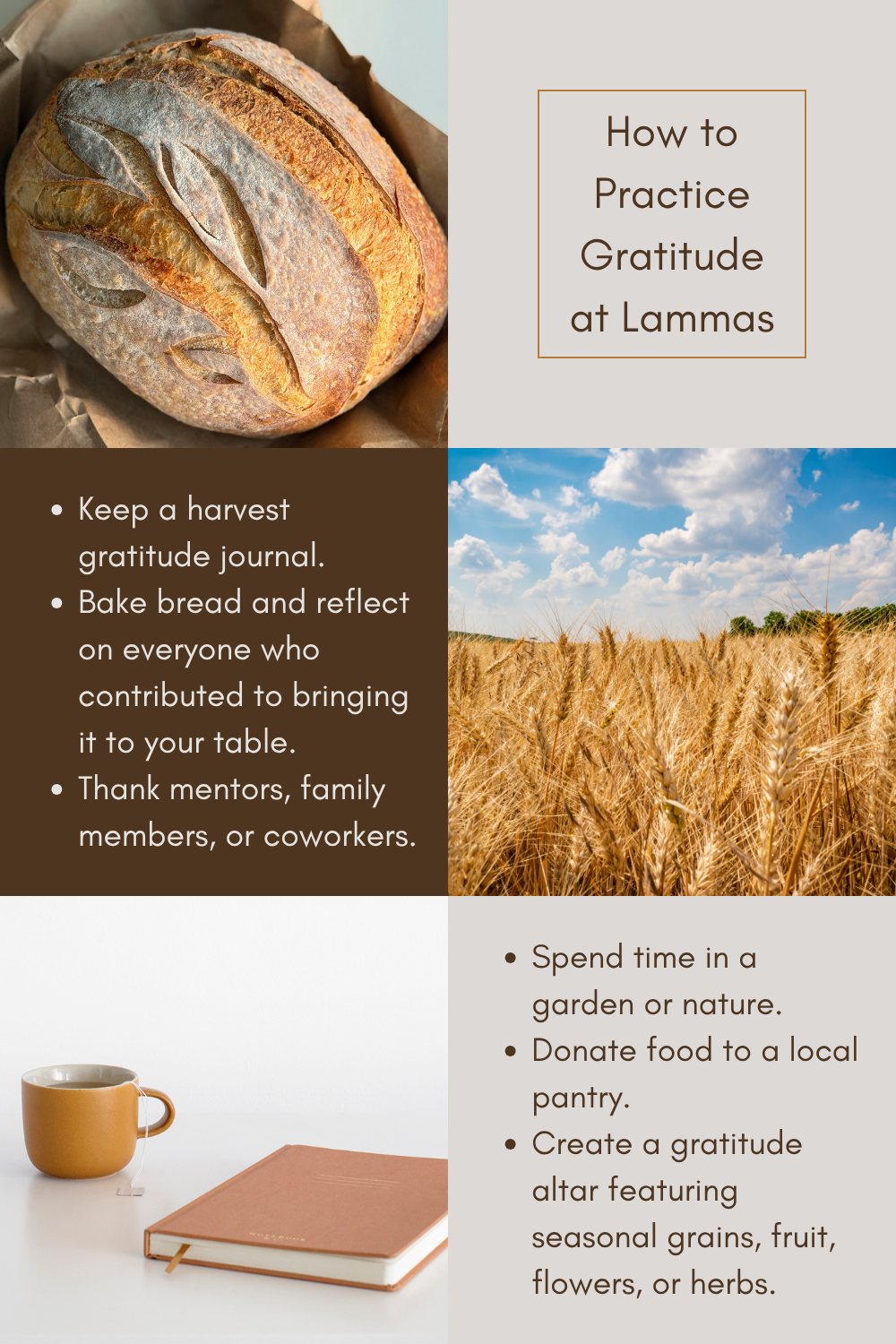
You don't need an elaborate ritual to embrace the spirit of Lughnasadh. The holiday reminds us that gratitude grows through simple, intentional practices that help us recognize abundance in our everyday lives.
One meaningful tradition is to begin a harvest gratitude journal. (Here are some gratitude journal prompts if you need help getting started!) Instead of listing everything you're thankful for, focus specifically on what you've "harvested" this year. Consider the goals you've reached, the lessons you've learned, the relationships you've strengthened, or the challenges you've overcome. Looking back over the past several months often reveals growth that might otherwise go unnoticed.
Food can also become a powerful gratitude practice. If you're able, bake a loaf of bread or prepare a meal featuring seasonal ingredients. As you cook, reflect on everyone who played a part in bringing that food to your table—from the farmers who planted the grain to the workers who transported it and the loved ones gathered to share the meal. This simple meditation can transform an ordinary dinner into an act of appreciation.
Lughnasadh is also an excellent time to express gratitude directly to the people who have supported you. Write a heartfelt note to a mentor, thank a coworker whose efforts often go unnoticed, or simply tell a family member how much you appreciate them. Gratitude shared aloud has a way of strengthening relationships as much as it uplifts the recipient.
Finally, spend time outdoors if you can. Visit a garden, walk through a park, or simply sit beneath a tree and observe the signs of late summer. Many people also enjoy creating a simple gratitude altar with seasonal grains, fresh fruit, sunflowers, herbs, or candles as a reminder of the abundance surrounding them. However you choose to celebrate, let your practice be less about perfection and more about noticing the gifts that are already present.
Reflective Journal Prompts for Lughnasadh Gratitude
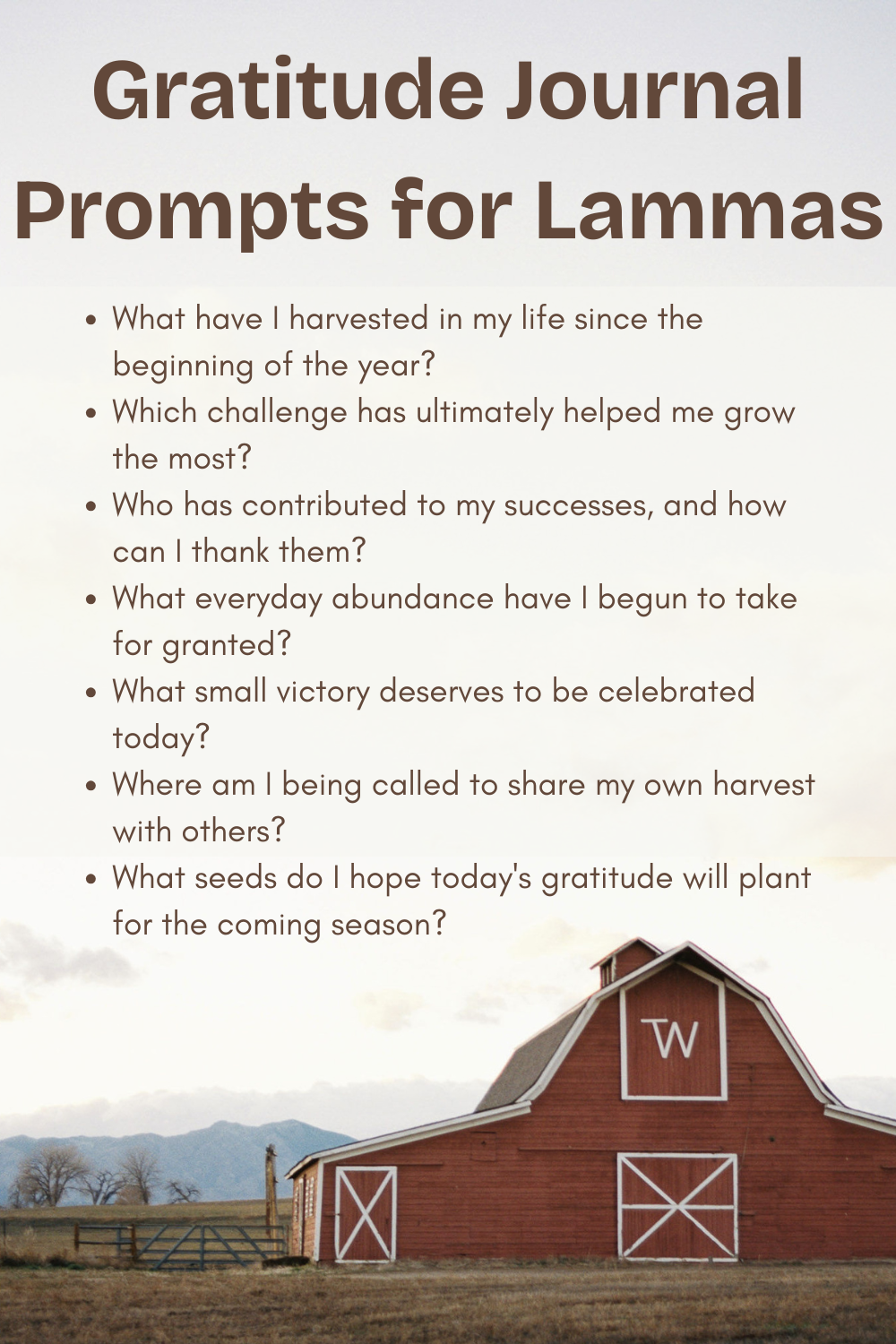
If you'd like to deepen your reflection, spend some time journaling with questions inspired by the first harvest.
What have I harvested in my life since the beginning of the year?
Which challenge has ultimately helped me grow the most?
Who has contributed to my successes, and how can I thank them?
What everyday abundance have I begun to take for granted?
What small victory deserves to be celebrated today?
Where am I being called to share my own harvest with others?
What seeds do I hope today's gratitude will plant for the coming season?
Final Thoughts: Living with a Harvest Mindset
Lughnasadh reminds us that gratitude isn't reserved for life's biggest milestones. It grows each time we pause to recognize progress, appreciate the people who have walked beside us, and notice the abundance that already surrounds us. Like the first harvest, many of life's greatest blessings arrive gradually, one small step at a time.
As the Wheel of the Year continues to turn, carry the spirit of Lughnasadh with you. Celebrate your first fruits without waiting for perfection. Honor the work that has brought you to this moment. Share your blessings generously, and trust that the seeds you continue to nurture today will become tomorrow's harvest. When we adopt a harvest mindset, gratitude becomes more than a seasonal practice—it becomes a way of seeing the world.
More About Lughnasadh

Want to explore more about Lammas? Our articles delve into the rich history and modern practices of this prominent Celtic festival at the first harvest holiday.
About Lammas: Lammas, also known as Lughnasadh, marks the beginning of the harvest season and is traditionally celebrated on August 1st in the Northern Hemisphere. As the first of three harvest festivals on the Wheel of the Year, it honors the gathering of the early grains and the abundance of the summer’s work coming to fruition. It’s a time to acknowledge both the literal and metaphorical seeds we’ve sown and to begin reaping the rewards of our intentions, labor, and care. Toast to your success!
Lammas Journal Prompts: As summer begins its slow shift toward autumn, this seasonal turning point offers a moment to pause and take stock—of your efforts, your growth, and the goals you set earlier in the year. Journaling at Lammas allows you to acknowledge your successes, learn from what hasn’t flourished, and clarify what still needs your attention.
Lugh: Lugh is a prominent figure in Celtic mythology, often revered as a god of many talents—craftsmanship, poetry, healing, and war among them. Known as “Lugh of the Long Arm” or “Samildánach” (meaning “many-skilled”), he embodies mastery, creativity, and leadership. In Irish legend, he is a heroic figure who leads the Tuatha Dé Danann to victory against the oppressive Fomorians, symbolizing the triumph of light, skill, and civilization over chaos. His mythology celebrates excellence in all pursuits, making him a powerful symbol of human potential and dedication to one’s craft.
How to Celebrate Lammas: Celebrating Lammas, the first harvest festival of the Wheel of the Year, is a beautiful way to honor the bounty of the earth and the fruits of your labor. One of the most traditional Lammas celebrations is baking Lammas bread—often using freshly harvested grains—as a symbol of gratitude for the season's abundance. Sharing this bread with loved ones or offering it in a ritual space is a meaningful way to connect with both community and spirit. You might also create a Lammas altar adorned with seasonal items like wheat, corn, sunflowers, and fruit, or perform a small gratitude ritual to reflect on your personal growth and the “harvests” you’ve gathered in your own life.
Plus, here’s a Lammas cocktail to help kick off your celebrations!
Lammas Meditation: Early August is an ideal time to meditate because it marks a moment of transition and reflection—the first harvest, when the fruits of our efforts begin to show. As the days subtly shorten and the energy of the year begins to wane, Lammas marks an opportunity for meditation to provide a grounding practice to help us pause and acknowledge both our accomplishments and our needs moving forward.
The Lammas Companion: This book features coloring pages, spells, journal prompts, and information about the first harvest festival of the year.